
Roof Care
Roof Maintenance West Palm Beach: Tile & Shingle Checklist
A practical roof maintenance checklist for West Palm Beach tile and shingle homes. Learn what to check, when, and why.
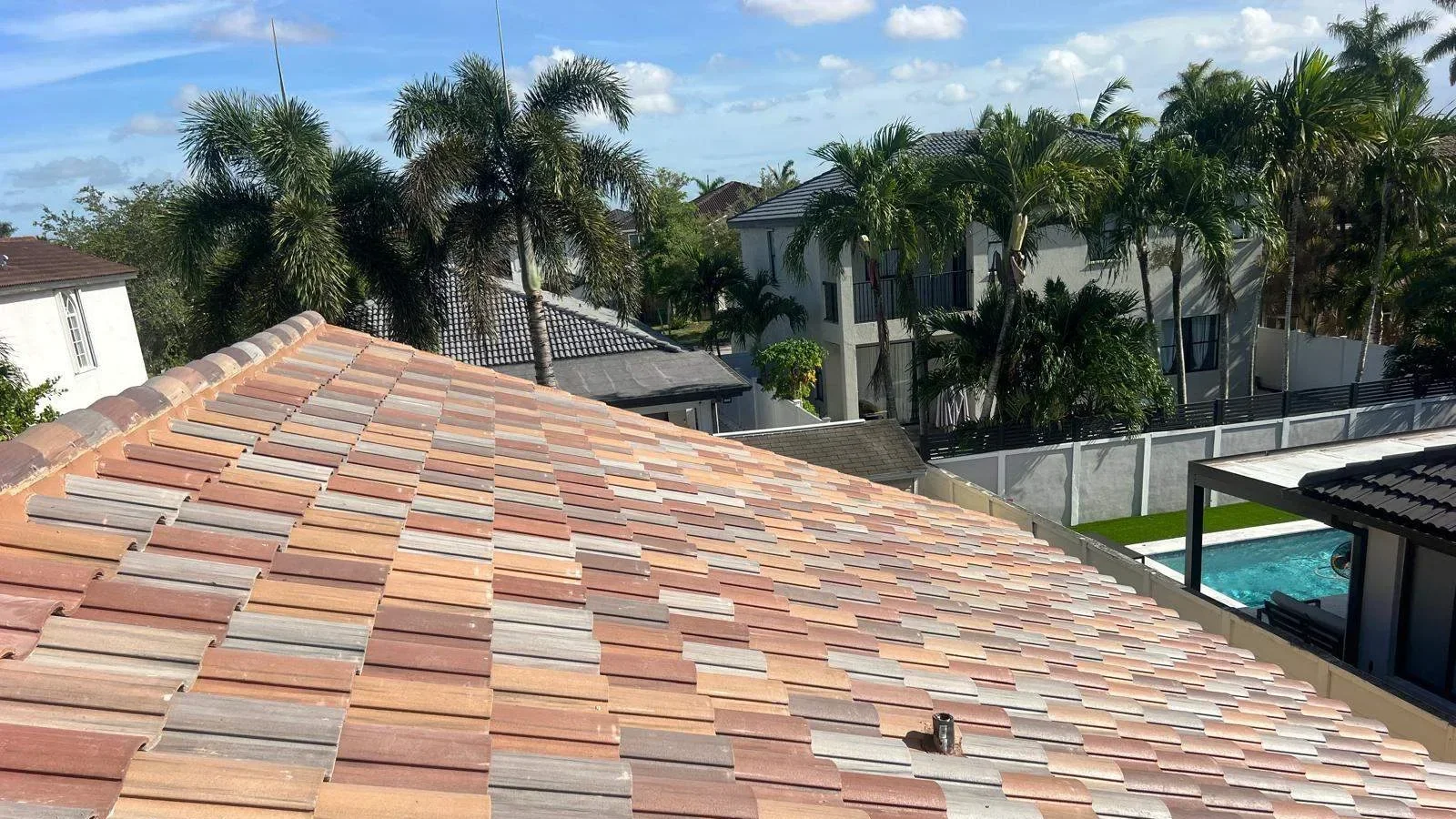
Your roof in West Palm Beach works harder than most. Salt air, summer storms, and relentless sun all wear it down, and the damage rarely announces itself until a ceiling stain shows up. This guide to roof maintenance in West Palm Beach gives you a season-by-season checklist for tile and shingle roofs. It covers what you can safely check from the ground, what needs a pro, and how to stay ahead of the problems that cost the most.
Why roof maintenance in West Palm Beach is its own animal
A roof in Ohio and a roof in Palm Beach County might use the same materials. They don't live the same life. Here, the stressors stack on top of each other all year, and there's no long winter break.
Heat and UV never take a season off
South Florida sun bakes roofing materials nearly every day of the year. On asphalt shingles, that UV exposure slowly breaks down the asphalt and loosens the protective granules. On tile roofs, the tile itself handles sun well, but the underlayment beneath it takes the heat that builds up in that hidden layer. Sealants around vents and flashing dry out and crack faster than they would up north.
Humidity and salt air work quietly
Coastal moisture keeps roofs damp longer after every rain. That encourages algae streaks on shingles and moss or lichen on shaded tile. Salt carried inland on the breeze can speed up corrosion on metal flashing, fasteners, and vent caps. None of this looks urgent at first. It adds up.
Storm season tests every weak spot
From June through November, tropical systems and afternoon thunderstorms push wind-driven rain sideways under edges and laps. A slightly lifted shingle or a cracked tile that would be harmless elsewhere can let water in here. That's why the timing of your checks matters as much as the checks themselves.
Tile vs. shingle: what actually fails first
Here's the surprising part. On many tile roofs, the tile isn't the weak link at all. The underlayment usually is.
Tile roofs: the underlayment is the real roof
Concrete and clay tiles shed most water and protect what's underneath from sun. But tiles aren't watertight on their own. The underlayment below is what actually keeps water out, and it ages on its own schedule. Cracked or slipped tiles expose it to sun and rain, which is why replacing broken tiles promptly matters. Walking on tile is also how a lot of tiles crack, so this is one roof you really shouldn't climb on yourself.
Shingle roofs: granules, seals, and edges
Asphalt shingles show their age more openly. Watch for granule loss (you'll often see it collecting in gutters), curling or cupping edges, and shingles whose adhesive seal has let go. Once a tab is unsealed, a strong gust can lift or tear it. The edges and ridge take the brunt of wind, so problems often start there.
A side-by-side look
This table compares the common wear points on each roof type and what to look for during routine upkeep.
| Wear point | Tile roof | Shingle roof |
|---|---|---|
| Surface material | Cracked, chipped, or slipped tiles | Granule loss, curling, missing tabs |
| Water barrier | Aging underlayment beneath tiles | Shingle seal strips and underlayment |
| Biological growth | Moss and lichen in shaded areas | Dark algae streaks |
| Flashing and penetrations | Valleys, chimneys, vent boots | Valleys, chimneys, vent boots |
| Wind vulnerability | Ridge and hip tiles, loose edge tiles | Edges, ridge caps, unsealed tabs |
| Safe to walk on? | No, tiles crack easily | Not recommended without training |
Your seasonal roof maintenance checklist
You don't need a ladder for most of this. Binoculars, a flashlight, and a walk around the house will catch a surprising amount.
Before storm season (spring)
- Walk the perimeter and scan the roof with binoculars for cracked tiles, missing shingles, or anything that looks out of line.
- Check gutters and downspouts from the ground for clogs, sagging, or overflow stains on fascia.
- Look for overhanging branches that could scrape the roof or fall in high wind. Call a tree professional for removal.
- Inspect your attic with a flashlight for water stains, damp insulation, or daylight showing through.
- Book a professional inspection so repairs happen before the first named storm, not after.
During storm season (summer and fall)
- After any significant storm, look for debris on the roof, displaced tiles, or shingles in the yard.
- Check interior ceilings, especially near exterior walls and around light fixtures, for new stains.
- Keep gutters clear so heavy rain drains away from fascia and walls.
- Photograph anything that looks damaged. Good photos help with insurance conversations.
After storm season (winter)
- Do a full ground-level review of the whole roof while the weather is mild.
- Note any algae, moss, or lichen growth and ask a pro about safe cleaning methods for your roof type.
- Check that attic vents aren't blocked by debris or nests.
- Schedule any repairs flagged earlier in the year while contractors' calendars are typically less crowded.
What you can check vs. what needs a pro
Plenty of homeowners want to get up there and look. Please don't. Falls from roofs are a real risk, and tile breaks under foot.
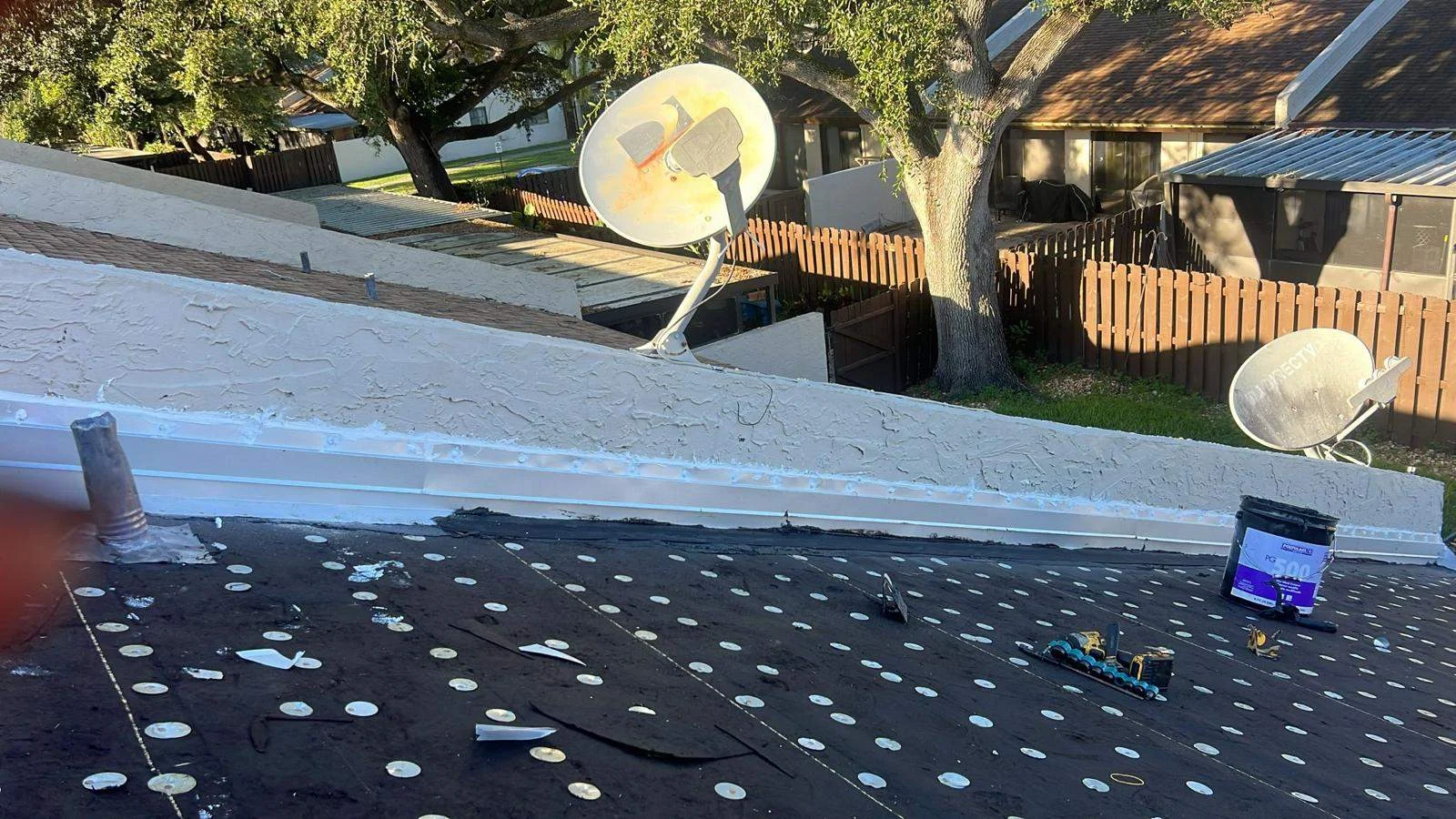
Safe homeowner tasks
Ground-level visual checks, attic inspections with good footing and a flashlight, watching gutters for granule buildup, and noting interior stains are all reasonable. So is keeping a simple log with dates and photos. That record makes it much easier to spot change over time.
Leave these to a licensed roofer
Anything that involves climbing onto the roof, replacing tiles or shingles, resealing flashing, or pressure washing belongs with a trained crew. Pressure washing in particular can strip shingle granules and crack or erode tile if done wrong. A professional roof inspection in West Palm Beach gets eyes on the valleys, flashing, ridge, and penetrations where leaks usually begin.
What a professional inspection typically covers
When our crew at PSR Roofing Company of West Palm Beach inspects a roof, we look at the surface material condition, flashing around chimneys, skylights, and vents, valleys, ridge and hip caps, drip edge, gutters, signs of soft decking, and the attic side for moisture or ventilation issues. You get a clear picture of what's fine, what to watch, and what needs attention now. Short and honest.
Small problems that turn into big ones
Most roof leaks don't start with a hole. They start with something tiny that nobody noticed for a season or two.
A single cracked tile
One cracked tile seems trivial. But it exposes the underlayment beneath to sun and water, which shortens that layer's life in that spot. Over a couple of rainy seasons, a small exposure can become rot in the decking. Replacing the tile early is a quick job. Repairing rotted decking is not.
Failed vent boots and dried sealant
The rubber boots around plumbing vents crack in Florida heat. So does the sealant around flashing. These are some of the most common leak sources we see, and they often show up as a small ceiling stain far from the actual entry point because water travels along rafters before dripping.
Clogged gutters and fascia rot
When gutters overflow, water spills behind them onto fascia boards and soffits. That wood stays wet in our humidity and starts to rot. If your gutters are undersized, pulling away, or constantly overflowing, our gutter installation and roofing team can take a look at the whole drainage picture.
How often should you schedule an inspection?
Once a year is a sensible baseline for most South Florida homes. Some situations call for more.
The yearly baseline
An annual professional inspection, ideally in spring before storm season, catches the slow wear from heat and humidity. Pair it with your own seasonal ground checks and you've got solid coverage.
After major storms
Any time a tropical storm or hurricane passes through, get the roof checked even if nothing looks wrong. Wind damage can lift tiles or break shingle seals in ways you can't see from the yard. If you're dealing with active water coming in, that's an emergency, not a maintenance call.
When buying, selling, or insuring
Real estate transactions and insurance renewals often bring roof questions. Requirements vary by insurer and situation, so check with your agent about what documentation they want. A current inspection report gives you a clear starting point for that conversation.
Repair, maintain, or replace?
Maintenance doesn't make a roof last forever. It helps you get the full life out of it and make the replacement call on your schedule.
When repair makes sense
Isolated damage, like a few cracked tiles, a lifted section of shingles, or a failed vent boot, is usually a repair. The rest of the roof is sound, so fix the problem and keep maintaining.
Signs it may be time to replace
Widespread granule loss, curling across large areas, repeated leaks in different spots, sagging, or a tile roof whose underlayment has reached the end of its life all point toward replacement. A good roofer will tell you plainly which side of the line you're on.
What affects the cost either way
Roof size, pitch, material, how much decking needs replacing, permit requirements in your area, and access all shape what a repair or replacement costs. When comparing quotes, make sure each one describes the same scope, materials, and underlayment. Vague line items make honest comparison hard.
Frequently asked questions
How often should a West Palm Beach roof be inspected?
At least once a year, ideally in spring, plus after any major storm.
Can I walk on my tile roof to check it?
We don't recommend it. Tiles crack under foot, and falls are a serious risk. Check from the ground and let a pro go up.
Is pressure washing safe for my roof?
It can damage both shingles and tile if done incorrectly. Ask a roofing professional about safe cleaning for your roof type.
What are early signs of a roof leak?
Ceiling stains, damp attic insulation, peeling paint near the roofline, and musty smells in upper rooms.
Do tile roofs need less maintenance than shingle roofs?
Not really. Tile resists sun well, but the underlayment beneath still ages and needs monitoring.
Should I get my roof checked if nothing looks wrong after a storm?
Yes. Wind damage is often invisible from the ground until water finds its way in.